
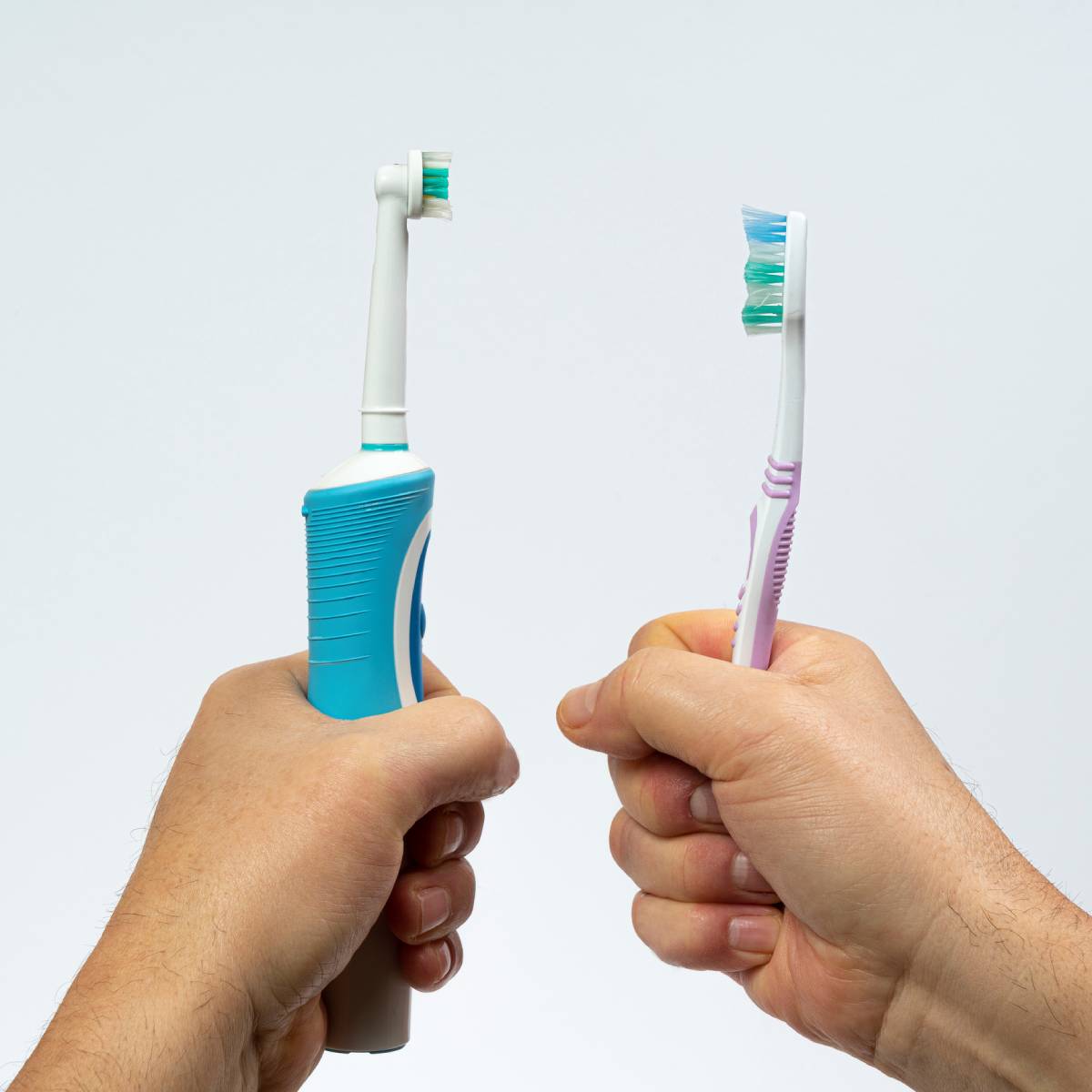
Maintaining good oral hygiene is the most effective way to avoid cavities, gum disease, and other oral health issues. In this article, we discuss choosing the right toothbrush and compare manual and electric toothbrushes.
Choosing the Right Toothbrush: Manual vs Electric
Regardless of whether you use an electric or a manual toothbrush, the benefits you receive mostly depend on the technique and the time you spend brushing. Even though some studies suggest that electric toothbrushes remove more plaque than manual ones, with the right technique and a consistent routine, a manual toothbrush is just as effective as an electric one.
The choice between a manual and an electric toothbrush can depend on the following points:
- If you want an inbuilt timer to help you brush long enough, opt for an electric toothbrush with one.
- For people with reduced hand dexterity, an electric toothbrush with a pressure sensor can help prevent excessive brushing and reduce the risk of gum tissue damage, especially if gum disease is present.
- Opt for an electric toothbrush if you enjoy additional features, such as different brushing modes and a Bluetooth connection to an app that provides tracking and personalized coaching.
- An electric toothbrush, especially one with all the features we listed above, can be significantly more expensive than a manual one and may require additional expense for battery replacements.
An electric toothbrush might be a better choice for you if you struggle to establish an effective oral hygiene routine and can benefit you by providing guidance and prompting you to brush your teeth for the recommended two full minutes.
However, if you do not want to spend additional money on an expensive device, we recommend consulting your dentist about proper oral hygiene techniques for you and following them closely to achieve good results when brushing with a manual brush.
Additionally, regardless of the brush you use, you still have to floss thoroughly every evening, avoid sugary and acidic foods and drinks, and visit your dentist twice a year for professional cleanings and fluoride treatments.
Types of Electric Toothbrushes
Several types of electric toothbrushes offer different benefits:
Oscillating-Rotating Toothbrushes
Oscillating-rotating toothbrushes have a small, round head that spins back and forth (sometimes with pulsing motions). They provide good mechanical plaque removal and can help clean hard-to-reach areas thanks to their small head. Oscillating-rotating toothbrushes can also be beneficial for people who wear braces.
Sonic Toothbrushes
Sonic toothbrushes use high-frequency side-to-side vibrations to dislodge plaque. They can suit people with sensitive teeth or gums, as they provide a gentler cleaning. Additionally, a sonic toothbrush can help clean between the teeth (but you still need to floss after).
Ultrasonic Toothbrushes
Ultrasonic toothbrushes use ultrasonic waves above the range of human hearing (>20 kHz), creating microscopic motion that disrupts plaque and bacteria. These brushes can also be good for people with sensitive teeth and gums.
Dual-Technology Toothbrushes
Dual-technology toothbrushes combine two cleaning techniques in a single device to enhance the overall brushing experience. The term can refer to a few different tech combinations, including:
- Two mechanical motion types (for example, sonic and oscillating)
- Multiple vibration or frequency modes that serve different purposes (for example, gentle or deep cleaning)
- Extra light or therapy features paired with brush action (for example, LED light therapy)
Get a Professional Teeth Cleaning at East Highland Dental
A professional cleaning is an essential part of a good oral hygiene routine, regardless of the toothbrush you use. Do not hesitate to schedule a cleaning with an experienced dentist at East Highland Dental today. We are looking forward to your visit.