
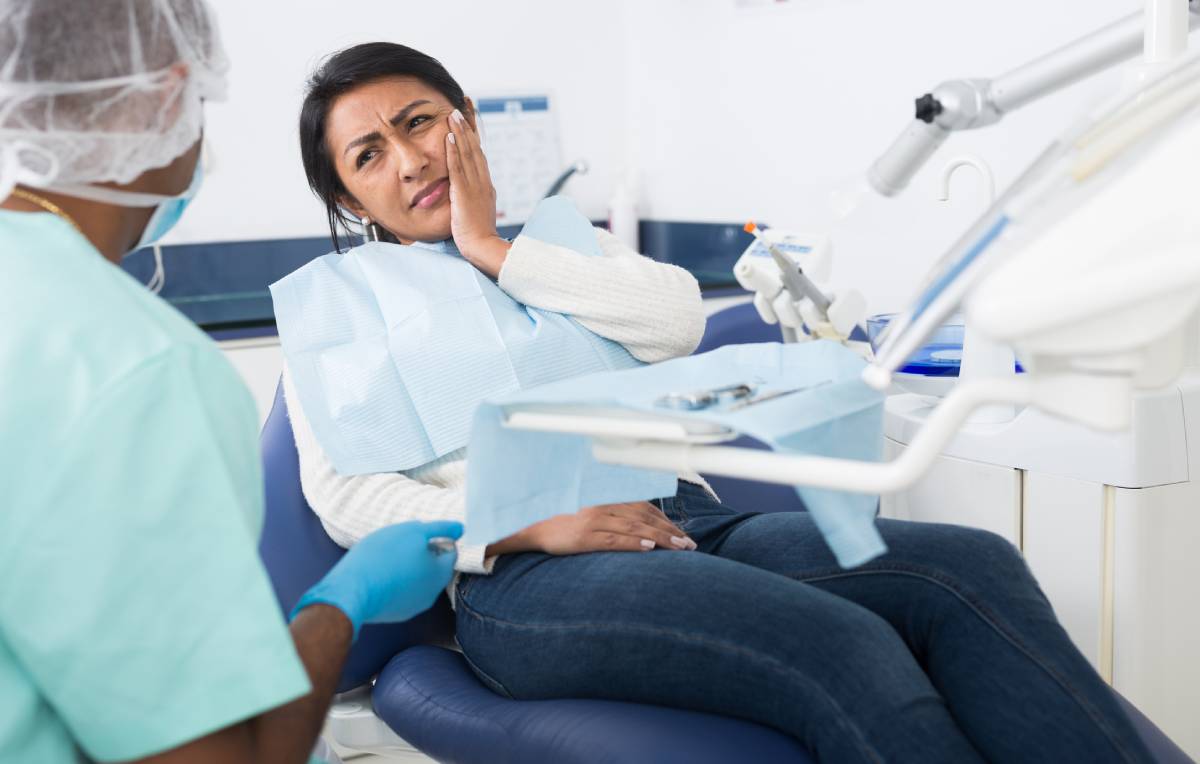
An emergency dentist is a specialist equipped to provide immediate care to people who sustain oral trauma or have acute infections, to preserve their oral health. But when is a dental problem considered an emergency? In this article, we list signs you should see a dentist immediately and provide first-aid tips.
When Is a Dental Problem Considered an Emergency?
The following situations are typically considered a dental emergency:
A Cracked or Chipped Tooth
A crack or chip in a tooth can expose the inner dentin, allowing bacteria to enter. As a result, the tooth can become infected, decay, and die. That is why we recommend seeing an emergency dentist if you crack or chip a tooth.
Also, bring the chipped piece of your tooth to the dental office, as your dentist might be able to reattach it using dental bonding. Keep the piece in a clean container filled with saliva or milk while waiting to see your doctor.
A Dislodged Tooth
A dislodged tooth due to trauma is loose in its socket and can be moved with a finger or a tongue. A dislodged tooth can heal and become stable again, provided that you receive timely medical attention.
It is crucial to check if the nerves, roots, and blood vessels of the tooth are intact and provide necessary treatment. Otherwise, the tooth can die and fall out. It is recommended to see an emergency dentist within 30 to 60 minutes of the trauma.
If you experience bleeding, place a sterile gauze in your mouth and very gently bite down on it, without applying too much pressure on your dislodged tooth. Also, you can use an ice pack, holding it to the outer side of your face to reduce bleeding and swelling.
A Knocked-out Tooth
A knocked-out tooth (it fell out from its socket) can also be saved and successfully heal over time if necessary treatment is performed within the first 30 to 60 minutes after the trauma. Follow these instructions if your tooth gets knocked out:
- Collect the tooth
- Rinse it gently and briefly (under 10 seconds) only if it is dirty. Never use soap, rub, or dry your tooth with a cloth or paper towels.
- Place the tooth in a clean container filled with saliva or milk (not water) or a special over-the-counter tooth-saving kit.
- If a container is not available, you can keep the tooth in your mouth (between your cheek and gums), but be careful not to swallow it.
- Do not let your tooth dry out.
- If possible, control bleeding by placing a sterile gauze in the mouth and gently biting down on it, and by holding a cold compress to the outer side of your cheek
Even if the knocked-out tooth can not be collected, it is necessary to see an emergency dentist right away, as the jawbone, blood vessels, and surrounding teeth may be damaged and require treatment.
Severe Toothache and Signs of Acute Infection
Severe and persistent toothache indicates an acute infection that can spread and even lead to an abscess, posing not only the risk of tooth loss but also a threat to your general health.
Apart from a severe toothache, other signs of acute infection include:
- Swelling of the gum tissue or swelling in the jaw and face
- Changed color of the tooth ( brown, gray, or black)
- Pimples or cysts on the gums around the tooth
- Pus oozing from the space where the gum tissue connects to your tooth
- Fever
- Breathing and swallowing difficulty
Get an Emergency Treatment at East Highland Dental
If you have sustained an oral trauma or show signs of acute infection, do not hesitate to arrange an appointment with an experienced emergency dentist at East Highland Dental. Our specialists use modern methods and equipment to preserve and restore each patient’s oral health.